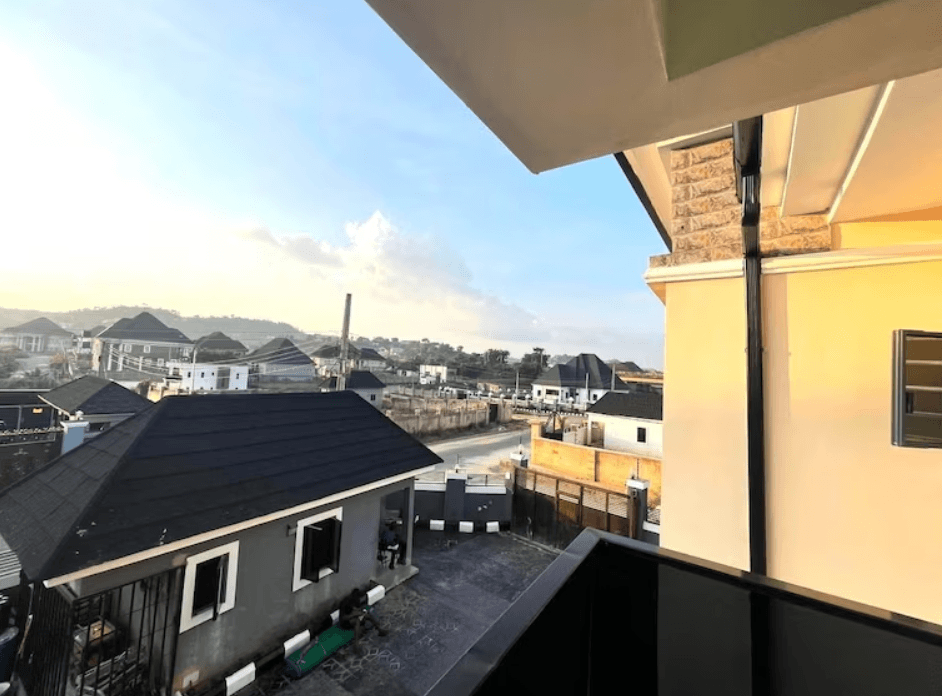
Enugu’s property market is witnessing renewed investor interest, supported by improving infrastructure and a more stable security environment.
According to BusinessDay, these developments have significantly strengthened the state’s investment climate over the past two years, attracting both individual and institutional investors.
Apartment Boom Reshapes the Market
At the center of this growth is the rapid rise of private serviced apartments, commonly referred to as short-lets.
These fully furnished units are rented on a daily, weekly, or monthly basis, offering a flexible alternative to traditional one- or two-year leases.
This shift marks a transition in Enugu’s real estate landscape, from passive rental income to a more active, hospitality-driven model.
Analysts describe the trend as a “quiet revolution,” particularly across key locations such as Independence Layout, Thinkers Corner, and the Government Reserved Area (GRA).
Strong Returns Attract Investors
The financial performance of short-let properties continues to draw attention. Data cited by BusinessDay indicates that:
- One-bedroom apartments rent for about ₦40,000 per night
- Two-bedroom units range between ₦70,000 and ₦120,000 per night
Even at moderate occupancy levels, returns can significantly exceed traditional annual rental income.
For example, a two-bedroom apartment generating ₦70,000 per night over 15 days can yield approximately ₦1.05 million monthly, far above typical yearly lease earnings when annualised.
Changing Investor Profile
The segment is attracting a diverse mix of investors, including diaspora Nigerians, young professionals, and investors from major cities such as Lagos and Abuja.
Some participants are purchasing properties outright, while others adopt a rental arbitrage model, leasing apartments long-term, furnishing them, and subletting as short-lets.
This flexibility has lowered entry barriers and expanded participation in the market.
Demand Driven by Diaspora and Business Travel
Demand for serviced apartments is being supported by a broad customer base.
Diaspora visitors increasingly prefer private apartments that offer more space, privacy, and a home-like environment compared to hotels.
In addition, business travellers, including consultants, contractors, and corporate executives are driving demand for flexible, work-friendly accommodation, particularly as infrastructure projects continue to expand economic activity in the state.
Developers Adjust to New Reality
Developers are responding to this shift by designing properties tailored specifically for short-let use.
As reported by BusinessDay, new developments increasingly feature studio and one-bedroom units, smart home technology, and gated mini-estates aimed at investors.
Some projects are now being positioned primarily as income-generating assets rather than traditional residential housing.
Risks and Operational Challenges
Despite its strong growth, the short-let segment presents several challenges. High setup costs including furnishing, power supply, maintenance, and security can impact profitability.
Operators must also manage guest screening, maintain service quality, and navigate potential regulatory changes, particularly around taxation or restrictions on short-term rentals.
Outlook
Enugu’s real estate sector is undergoing a structural shift, with short-let apartments emerging as a key growth driver.
As highlighted by BusinessDay, improved infrastructure, rising demand, and strong rental yields are reshaping the market into a more dynamic and competitive investment environment.
Sustained growth will depend on continued infrastructure development, regulatory clarity, and the ability of operators to maintain consistent standards in an increasingly crowded space.
SEE: Nigeria’s Reforms Push Real Estate Into Tough, Disciplined Era

Grow Your Real Estate Business Online
Grow Your Real Estate Business Online
RealtyBox helps developers, agencies, and property brands attract qualified buyers through AI, SEO, Google Ads, content marketing, and strategic digital marketing.
Book a Free Strategy CallRealtyBox helps developers, agencies, and property brands attract qualified buyers through AI, SEO, Google Ads, content marketing, and strategic digital marketing.
Book a Free Strategy Call