For generations, owning a home has been one of the biggest milestones in Nigeria. It represents stability, family, security, and wealth.
Yet for millions of Nigerians today, especially young professionals, newly married couples, artisans, entrepreneurs, and civil servants…that dream is drifting further away.
This isn’t because Nigerians don’t want to own homes. It’s because the housing system increasingly works against the average income earner.
The real question is no longer “Why aren’t Nigerians building houses?”
It is:
Has Nigeria unintentionally created a housing system that only a small percentage of citizens can realistically participate in?
This article explores why homeownership is becoming increasingly difficult and what must change if the trend is to be reversed.
The Numbers Tell a Difficult Story
Nigeria has one of the world’s youngest populations, with millions entering adulthood, getting married, and forming new households every year.
Every new household creates demand for shelter.
But demand for shelter does not automatically become demand for homeownership.
Instead, many young Nigerians begin married life by:
- Renting apartments
- Living in family compounds
- Sharing accommodation
- Delaying independent housing altogether
The result is a rapidly growing rental market and a shrinking pathway to ownership.
The housing challenge is therefore not simply about building more houses, it’s about making ownership economically possible.
READ ALSO: How to Buy Property in Nigeria in 2026 (Complete Step-by-Step Guide)
Housing Prices Have Outpaced Incomes
Perhaps the biggest problem is the widening gap between income growth and housing costs.
Over the past decade:
- Building materials have become significantly more expensive.
- Land values in major cities have surged.
- Construction labour costs have increased.
- Inflation has reduced purchasing power.
- Interest rates have made borrowing more expensive.
Meanwhile, salary growth has been relatively modest for many workers.
This means that even households with stable incomes often struggle to save enough to buy land, let alone complete a home.
Homeownership has gradually shifted from an achievable life goal to a long-term financial challenge.
The Cost of Building Goes Beyond Cement and Blocks
Many people assume that building a house simply involves buying land and purchasing construction materials.
The reality is much more complex.
A prospective homeowner may have to budget for:
- Land purchase
- Survey plan
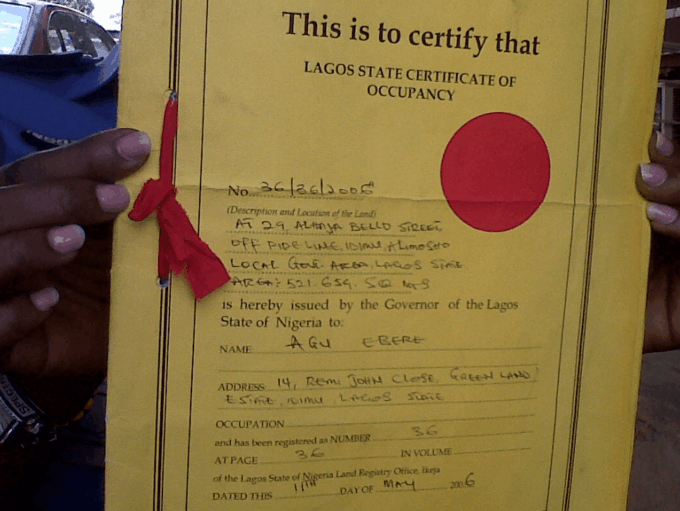
- Legal documentation
- Title registration
- Development approvals
- Professional fees
- Construction
- Utility connections
Administrative requirements alone can be extensive.
For example, the North Central land administration comparison shows that property registration commonly requires numerous supporting documents, including application letters, survey plans, deeds of assignment, certified title documents, valuation reports, tax evidence, and photographs of the property.

Grow Your Real Estate Business Online
RealtyBox helps developers, agencies, and property brands attract qualified buyers through AI, SEO, Google Ads, content marketing, and strategic digital marketing.
Book a Free Strategy CallDepending on the state, completion may take between one and six months, with additional consent, registration, stamp duty, processing and other statutory fees applying.
For many first-time buyers, these costs are rarely included in their initial financial planning.
Nigeria Has a Housing System But Not an Affordable Housing System
The country continues to produce new estates, gated communities and residential developments.
The question is:
Who are they being built for?
Many developments target:
- High-income professionals
- Investors
- Nigerians in the diaspora
- Institutional buyers
Far fewer projects are designed around what the average civil servant, teacher, nurse, graduate, artisan or small business owner can comfortably afford.
This creates a mismatch between supply and purchasing power.
Developers respond to rising construction costs by building homes with higher selling prices.
Consumers respond by postponing ownership and renting for longer.
Both sides are behaving rationally within a system that no longer aligns housing supply with household income.
READ ALSO: Cost of Building a House in Nigeria 2026: From ₦2M to ₦50M Easily Explained
The Mortgage Gap
In many countries, homeownership depends on long-term mortgage finance.
Instead of paying for a home upfront, families spread payments over decades.
Nigeria’s mortgage market remains inaccessible for many potential buyers.
Challenges include:
- High borrowing costs
- Strict lending requirements
- Limited mortgage availability
- Informal employment that makes income verification difficult
Without affordable long-term finance, many Nigerians must rely almost entirely on personal savings.
That significantly delays ownership.
Land Administration Still Adds Friction
Buying land is only the beginning.
Securing ownership documentation often involves multiple agencies, verification processes and statutory payments.
The RealtyBox review of land administration requirements in the North Central geopolitical zone illustrates that requirements and fees differ by state, while timelines can range from one to six months depending on jurisdiction and documentation.
These complexities increase transaction costs and create uncertainty, particularly for first-time buyers.
Simplifying these processes would reduce both time and financial barriers.
Renting Is No Longer a Temporary Stage
Historically, renting was often viewed as a short step before homeownership.
That pattern is changing.
Today, renting has become a long-term housing strategy for many households.
Several factors explain this shift:
- Rising urban land prices
- Delayed savings
- Job mobility
- Inflation
- Limited mortgage access
- High construction costs
This is particularly visible in major cities where rental demand continues to grow faster than affordable ownership opportunities.
SEE ALSO: 10 Must-Have Top Documents Required for Land Purchase in Nigeria 2026
Have We Misunderstood “Luxury Housing”?
Another issue affecting the market is how the word luxury is used.
In many advertisements, homes are described as luxury simply because they include:
- POP ceilings
- Imported tiles
- Granite countertops
- Decorative lighting
But genuine luxury is defined less by finishes and more by:
- Exceptional location
- Superior design
- High-quality construction
- Privacy
- Long-term maintenance
- Community planning
- Professional property management
When almost every new development is marketed as “luxury,” the market loses an important middle segment: well-designed, durable, affordable housing for ordinary working families.
Nigeria needs more quality housing, not simply more homes labelled luxury.
What Needs to Change?
Addressing the housing crisis requires more than building additional estates.
Several structural reforms could significantly improve affordability.
1. Simplify Land Administration
Reducing documentation delays and improving digital land registration would lower transaction costs.
2. Expand Affordable Mortgage Financing
Longer repayment periods and lower borrowing costs would make ownership more realistic for middle-income households.
3. Encourage Incremental Housing
Policies that support phased construction can help families build as their incomes grow instead of waiting decades for full financing.
4. Invest in Infrastructure
Roads, drainage, electricity and water reduce development costs over time and make affordable communities more viable.
5. Build for Income Levels
Developers should align housing products with actual household earnings instead of assuming demand only exists for premium developments.
READ MORE: 12 Best Ways of Acquiring Land in Nigeria 2026
Homeownership Should Not Become an Inherited Privilege
One worrying trend is that ownership increasingly depends on:
- Family land
- Generational wealth
- Inheritance
- Financial assistance from relatives
While these remain valuable pathways, they should not become the primary route into homeownership.
A healthy housing system allows hardworking citizens to own homes through productive employment and accessible financing not only through inherited assets.
Final Thoughts
Nigeria’s housing challenge is often described as a shortage of buildings.
In reality, it is equally a shortage of affordability.
People are forming households.
Cities are expanding.
Developers are building.
Yet ownership remains beyond the reach of many working Nigerians because incomes, financing, land administration and construction costs no longer move in the same direction.
If those structural issues remain unresolved, millions of Nigerians may continue to spend their most productive years renting, not because they lack ambition, but because the housing system makes ownership increasingly difficult.
The future of Nigerian housing therefore depends not only on constructing more homes, but on creating a system where ordinary citizens can realistically aspire to own one.
Grow Your Real Estate Business Online
RealtyBox helps developers, agencies, and property brands attract qualified buyers through AI, SEO, Google Ads, content marketing, and strategic digital marketing.
Book a Free Strategy Call