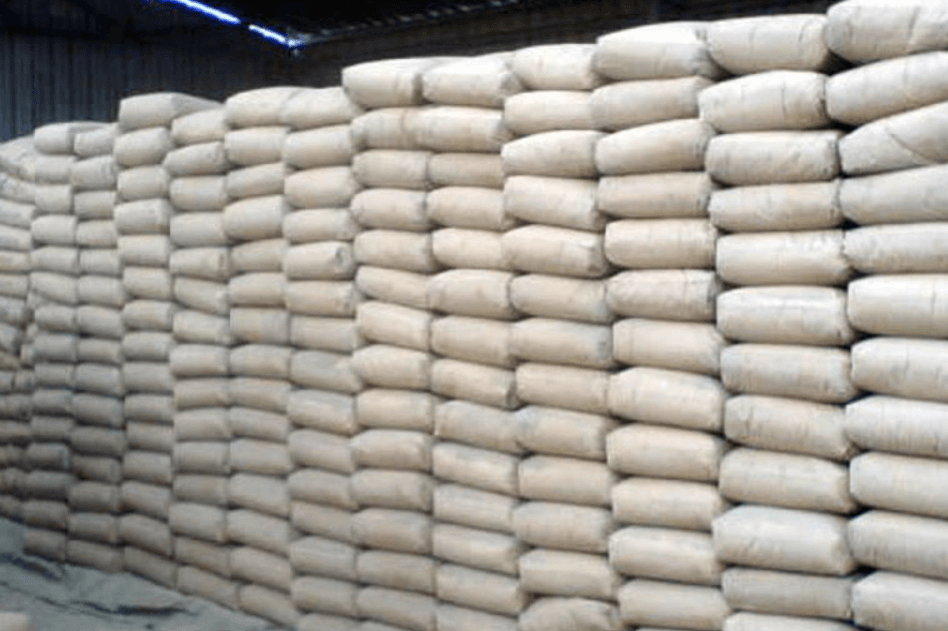
At daybreak in Obajana, Kogi State, long convoys of trucks rumble out of sprawling cement plants, carrying loads that will soon take shape as roads, bridges and homes across Nigeria.
What appears routine for drivers and engineers reflects something deeper for the economy: a growing shift from import dependence to domestic industrial production.
From Import Reliance to Industrial Capacity
Nigeria’s cement industry has undergone a dramatic transformation over the past two decades. In the late 1990s, the country produced less than 2 million metric tonnes annually and depended on imports for more than 70 percent of its needs.
A policy shift anchored on backward integration changed that trajectory. Today, installed capacity stands at about 62.8 million metric tonnes per year, while domestic demand hovers between 28 and 30 million tonnes. The surplus positions Nigeria not just as self-sufficient, but as an exporter within West Africa.
Leveraging Natural Advantage
At the core of this growth is limestone, an essential input for cement production.
Nigeria is estimated to hold 2.3 trillion metric tonnes of limestone resources, with significant reserves across Kogi, Ogun, Edo, Sokoto and Benue states.
Major plants are strategically located near these deposits, reducing transport costs and strengthening local value chains. Other materials such as clay, gypsum and laterite are also readily available, giving the industry a strong localisation advantage and reducing exposure to foreign exchange volatility.
Cement and Infrastructure Demand
A shift in infrastructure strategy is also boosting demand. Concrete roads, increasingly adopted across parts of the country, offer longer lifespans-20 to 30 years compared to asphalt’s 10 to 15 years, and require less maintenance.
With Nigeria’s road network spanning over 193,000 kilometres, much of it still underdeveloped, the move toward concrete construction signals sustained, long-term demand for cement.
Expanding Market and Regional Exports
Nigeria’s cement market, valued at approximately $1.4 billion in 2025, is projected to approach $2 billion by 2029. Beyond domestic consumption, producers are targeting regional markets, leveraging proximity and trade agreements such as AfCFTA.
The country has already become a net exporter of cement within West Africa, reversing decades of reliance on imports.
A Broader Industrial Ecosystem
The cement industry’s impact extends beyond production. Around major plants, entire ecosystems have emerged:
- Quarrying activities support mining jobs
- Logistics networks move cement nationwide
- Energy investments power production facilities
- Construction value chains – from blocks to real estate expand
- Engineering and maintenance services build technical capacity
Economists describe this as a “platform sector” – one that stimulates multiple layers of economic activity.
Pricing Pressures and Policy Balance
Despite its progress, the sector faces challenges. Cement prices remain high, driven by energy costs, logistics constraints and market concentration among a few dominant players.
For policymakers, the task is to balance industry protection with competition and affordability. Opening the market too widely risks undermining local production, while limited competition can sustain high prices.
Lessons from Cement’s Success
Industry analysts often cite cement as one of Nigeria’s most successful industrial policy outcomes. More than $6 billion in private investment has helped transform the sector into a regional hub.
Key drivers of this success include:
- Local processing of raw materials
- Large-scale production capacity
- Extensive distribution networks
- Alignment between government policy and private investment
The Road Ahead
The future of Nigeria’s cement industry will likely depend on three factors:
- Expanding exports to generate foreign exchange
- Reducing costs through improved energy and logistics systems
- Adapting to global sustainability demands, including lower-carbon production
Building Beyond Cement
As trucks continue to leave Obajana daily, they carry more than cement, they represent jobs, infrastructure and industrial value creation.
For decades, Nigeria exported crude oil while importing refined products. Cement offers a contrasting narrative: a sector where local resources are processed domestically to create value.
The broader implication is clear. The same model could be applied to agriculture, mining and manufacturing. Cement, in this context, is not just a building material…it is a blueprint for Nigeria’s industrial future.

Grow Your Real Estate Business Online
RealtyBox helps developers, agencies, and property brands attract qualified buyers through AI, SEO, Google Ads, content marketing, and strategic digital marketing.
Book a Free Strategy Call