How to buy property in Nigeria is one of the most searched real estate questions in 2026, and for good reason.
Property prices continue to rise across Lagos, Abuja, Port Harcourt, Ogun State, Ibadan, Enugu, Uyo, and other growing cities.
This guide explains the exact steps to buy land, houses, apartments, and investment properties in Nigeria safely, avoid scams, verify title documents, conduct due diligence, complete legal transfers, and secure ownership without costly mistakes.
If you want a concise answer to how to buy property in Nigeria, follow these steps:
- Determine your budget and preferred location.
- Hire a qualified property lawyer and a reputable real estate agent.
- Inspect the property physically.
- Verify ownership through the Land Registry.
- Confirm survey coordinates at the Surveyor-General’s office.
- Review title documents carefully.
- Sign a Contract of Sale.
- Make payment through traceable banking channels.
- Execute a Deed of Assignment.
- Obtain Governor’s Consent where required.
- Register your title with the relevant state authority.
While the process sounds straightforward, many buyers lose millions of naira because they skip due diligence, rely on verbal assurances, or trust unverified sellers.
The rest of this guide explains every step in detail so you can buy property in Nigeria confidently and legally.
Read along to get full insight into how tot buy property in Nigeria in 2026 without getting scammed.
GO TO:
Table of Contents
Why Buying Property in Nigeria Remains Attractive in 2026
Nigeria remains one of Africa’s largest real estate markets.
Rapid urbanisation, population growth, infrastructure expansion, and increasing housing demand continue to create opportunities for homeowners and investors.
Major investment destinations include:
- Lagos
- Abuja
- Port Harcourt
- Ogun State
- Ibadan
- Enugu
- Uyo
- Asaba
- Benin City
- Kano
Residential developments, commercial buildings, warehouses, agricultural land, short-let apartments, and mixed-use projects continue attracting both local and foreign investors.
Many buyers enter the market because of:
- Long-term capital appreciation
- Rental income opportunities
- Inflation protection
- Business expansion
- Retirement planning
- Family wealth preservation
However, the potential rewards come with risks.
Title disputes, government acquisition issues, family land conflicts, forged documents, and multiple sales of the same property remain common problems.
That is why understanding the proper purchase process is essential.
How to Buy Property in Nigeria in 2026

Without wasting too much time, let’s dive into how to buy property in Nigeria step by step…
Step 1: Define Your Budget Before Searching for Property
The first step in buying property is determining exactly how much you can afford.
Many buyers focus only on the purchase price and forget transaction costs.
Your budget should include:
- Property Purchase Price
This is the negotiated amount paid to the seller.
- Legal Fees
Property lawyers typically charge professional fees for document review, due diligence, contract drafting, and title perfection.
- Agency Fees
Where an agent is involved, commission may apply.
- Survey Fees
Survey verification and charting often attract professional charges.
- Registration Fees

Grow Your Real Estate Business Online
RealtyBox helps developers, agencies, and property brands attract qualified buyers through AI, SEO, Google Ads, content marketing, and strategic digital marketing.
Book a Free Strategy CallState governments charge fees for title registration and related documentation.
- Governor’s Consent Fees
Many states require payments before granting consent.
- Stamp Duties
Property transfer documents usually require stamping.
- Miscellaneous Costs
Additional expenses may include:
- Development levies
- Infrastructure charges
- Community fees
- Documentation costs
- Valuation fees
A buyer planning to spend ₦50 million on property may ultimately require several million naira extra for transaction and perfection costs.
Planning properly prevents unpleasant surprises later.
Step 2: Choose the Right Location

Location remains the most important factor in real estate.
A good property in the wrong location may underperform for years. Meanwhile, an average property in a rapidly developing area can generate substantial returns.
Before choosing a location, consider:
- Accessibility
Can residents easily access major roads and transportation routes?
- Security
What is the area’s security profile?
- Infrastructure
Consider:
- Road networks
- Electricity supply
- Drainage systems
- Water availability
- Internet connectivity
- Commercial Activity
Areas experiencing increasing business activity often see stronger property appreciation.
- Future Development
Investigate planned projects such as:
- Highways
- Rail systems
- Industrial parks
- Shopping centres
- Airports
- Universities
These developments often increase property values significantly over time.
- Rental Demand
Investors should assess occupancy levels and rental demand before purchasing.
A beautiful property with weak rental demand may not deliver expected returns.
SEE ALSO: Top 5 Fastest Growing Areas in Lagos (2026)
Step 3: Understand Land Ownership in Nigeria
One of the most misunderstood aspects of Nigerian real estate involves land ownership.
Under the Land Use Act, land is vested in the Governor of each state and held in trust for the people.
This means buyers generally acquire rights of occupancy rather than absolute ownership.
Understanding this legal framework helps buyers appreciate why documentation, consent requirements, and registration procedures are so important.
When buying property, you are typically acquiring an interest in land through legal instruments such as:
- Deed of Assignment
- Deed of Transfer
- Deed of Sublease
- Registered Conveyance
- Certificate of Occupancy
The validity of these documents determines the security of your investment.
READ MORE: 12 Best Ways of Acquiring Land in Nigeria
Step 4: Hire the Right Professionals
One of the biggest mistakes property buyers make is trying to save money by avoiding professional advice.
A small legal fee today can save millions tomorrow.
Hire a Property Lawyer
Your lawyer should:
- Conduct legal due diligence
- Review title documents
- Verify ownership
- Draft agreements
- Negotiate legal clauses
- Process title perfection
- Protect your interests
Avoid using the seller’s lawyer.
The seller’s lawyer represents the seller, not you.
You need independent legal representation.
Hire a Reputable Real Estate Agent
A good agent helps you:
- Identify suitable properties
- Negotiate better prices
- Access off-market opportunities
- Verify seller information
- Understand local market conditions
Work with professionals who have strong reputations and verifiable track records.
Step 5: Physically Inspect the Property
Never buy property solely from photographs, videos, brochures, or online listings.
Physical inspection remains mandatory.
During inspection, verify:
- Property Boundaries
Ensure boundaries align with the survey plan.
- Access Roads
Confirm there is legal and practical access to the property.
- Occupation Status
Determine who currently occupies the property.
Ask:
- Is the property vacant?
- Are tenants present?
- Are there caretakers?
- Are there squatters?
- Structural Condition
For houses and buildings, inspect:
- Roofing
- Walls
- Plumbing
- Electrical systems
- Drainage
- Foundation
- Neighbourhood Conditions
Observe:
- Traffic patterns
- Security
- Noise levels
- Flooding risks
- Commercial activity
Visit at different times of the day if possible.
READ MORE: How to Verify Land Title in Nigeria (7 Proven Steps to Avoid Land Scams 2026)
Step 6: Verify the Seller’s Identity
Before paying any money, confirm exactly who is selling the property.
Ask critical questions:
- Is the seller the legal owner?
- Does the seller’s name appear on title documents?
- Is the seller acting under a Power of Attorney?
- Is the seller an executor of an estate?
- Is the seller authorised by a company?
Many fraudulent transactions occur because buyers assume sellers have authority to transfer ownership.
Always demand documentary proof.
Step 7: Conduct Land Registry Searches
This is one of the most important stages in the property acquisition process.
Land Registry searches help determine whether:
- The title is genuine
- The owner is correctly identified
- Mortgages exist
- Encumbrances exist
- Caveats have been lodged
- Previous transfers were properly recorded
A registry search may reveal problems that are impossible to detect through physical inspection alone.
Never skip this step.
Step 8: Verify Survey Coordinates
Many buyers mistakenly believe possessing a survey plan automatically means a property is safe.
That assumption can be expensive.
A survey plan must be charted and verified through the Office of the Surveyor-General.
Survey verification helps determine whether the property falls within:
- Government acquisition areas
- Committed lands
- Road expansion corridors
- Disputed territories
- Restricted zones
A property can appear legitimate while still being located within land earmarked for government use.
Verification protects buyers from future losses.
Step 9: Review Title Documents Carefully
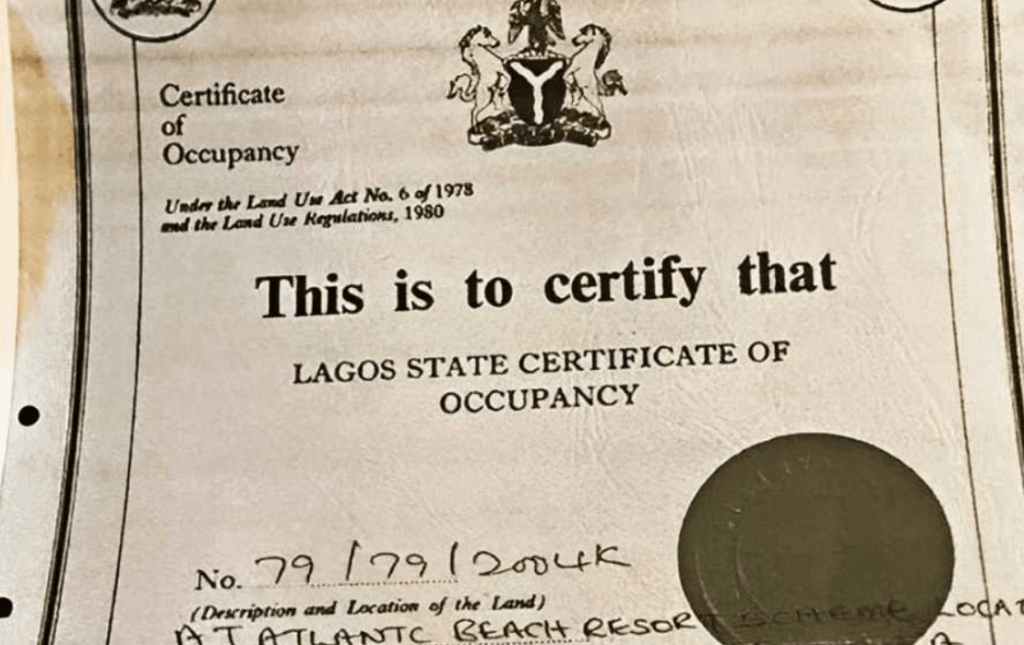
Property documents form the foundation of ownership.
Every buyer should understand the major documents commonly encountered in Nigerian real estate transactions.
Certificate of Occupancy (C of O)
A Certificate of Occupancy is one of Nigeria’s most recognised title documents.
It evidences a statutory right of occupancy granted by the government.
A C of O does not automatically make a transaction safe, but it is generally viewed as a strong title document.
Governor’s Consent
Governor’s Consent validates transfers involving statutory rights of occupancy.
It plays a major role in title perfection.
Deed of Assignment
This document transfers ownership interest from seller to buyer.
It serves as one of the most important transfer documents in property transactions.
Registered Conveyance
Older properties may have registered conveyances executed before modern title systems became widespread.
Survey Plan
This identifies:
- Location
- Boundaries
- Measurements
- Coordinates
Building Approval
For developed properties, planning approvals should be verified.
Probate and Letters of Administration
These become important when inherited property is involved.
The seller must demonstrate legal authority to dispose of the property.
Step 10: Conduct Community and Family Verification
This step is often overlooked.
In many parts of Nigeria, community interests remain important.
Where family land is involved, buyers should ensure proper family consent exists.
Questions to investigate include:
- Are family members disputing ownership?
- Has the land been sold previously?
- Are community obligations outstanding?
- Are there traditional claims affecting ownership?
Failure to investigate community issues can create long-term disputes.
Step 11: Investigate Litigation Risks
Property litigation can continue for years.
Before buying, your lawyer should investigate whether the property is involved in:
- Family disputes
- Ownership conflicts
- Probate disputes
- Court injunctions
- Debt recovery proceedings
- Receivership actions
Purchasing a litigated property may expose buyers to costly legal battles.
SEE ALSO: Top 5 Best Real Estate Academies in Lagos 2026
Step 12: Negotiate and Sign a Contract of Sale
Once due diligence is completed satisfactorily, the parties may proceed with a Contract of Sale.
A properly drafted contract should contain:
- Names of parties
- Property description
- Purchase price
- Payment schedule
- Completion date
- Representations and warranties
- Default provisions
- Dispute resolution clauses
- Refund obligations
The contract establishes the framework for the transaction before final transfer occurs.
Step 13: Make Payment Securely
Payment procedures matter.
Avoid:
- Cash payments
- Untraceable transfers
- Payments to unrelated third parties
Instead:
- Use bank transfers
- Request receipts
- Maintain transaction records
- Confirm account ownership
Many experienced buyers also use escrow arrangements where appropriate.
Every payment should be documented.
Step 14: Execute the Deed of Assignment
After payment, the primary transfer document is usually executed.
The Deed of Assignment should contain:
- Names of parties
- Property description
- Purchase consideration
- Root of title
- Transfer provisions
- Covenants
- Indemnities
- Execution clauses
The document should be reviewed carefully before signing.
Errors can create future ownership complications.
Step 15: Collect Original Documents
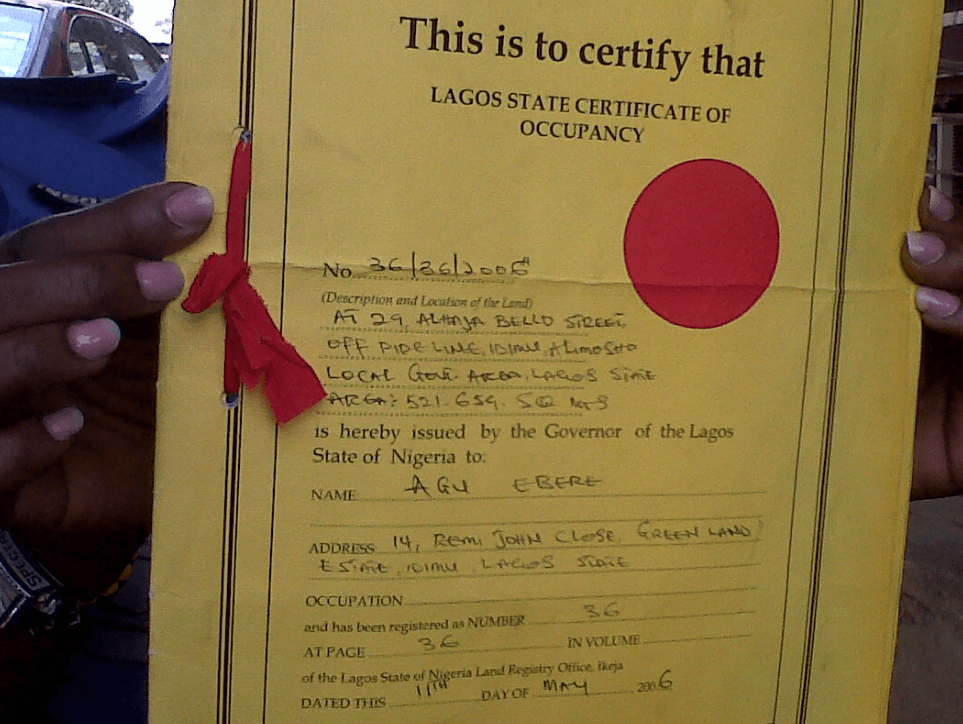
Before concluding the transaction, obtain all relevant originals.
These may include:
- Original survey plan
- Original Certificate of Occupancy
- Original Deed of Assignment
- Governor’s Consent
- Building approvals
- Receipts
- Tax records
Maintain secure copies and backups.
Original documents remain important throughout the ownership period.
Step 16: Perfect Your Title
Many buyers stop after receiving documents.
That is a mistake.
Title perfection strengthens legal ownership and ensures government records reflect the transaction.
Perfection commonly involves:
- Governor’s Consent
Obtaining required consent from the state government.
- Stamp Duties
Paying applicable stamp duties.
- Registration
Registering transfer documents with the Land Registry.
Without proper perfection, ownership rights may remain vulnerable.
READ ALSO: Cost of Building a House in Nigeria 2026: From ₦2M to ₦50M Easily Explained
How to Buy Property in Nigeria as a Foreigner in 2026
Foreigners can acquire property interests in Nigeria.
However, transactions must comply with:
- Land laws
- State regulations
- Corporate regulations
- Immigration requirements where applicable
Foreign buyers commonly acquire property through:
- Personal Ownership
Often used for residential purchases.
- Nigerian Companies
Popular for commercial investments.
- Joint Ventures
Useful for large-scale developments.
- Leasehold Structures
Sometimes preferred for institutional investments.
Foreign investors should always obtain specialised legal advice before proceeding.
How to Buy Property in Nigeria Through a Nigerian Company
Many foreign investors prefer corporate acquisition structures.
Advantages include:
- Easier business operations
- Asset management efficiency
- Improved financing options
- Better succession planning
- Investment scalability
Corporate ownership is common for:
- Hotels
- Warehouses
- Office buildings
- Residential estates
- Manufacturing facilities
- Commercial developments
The company must remain compliant with regulatory requirements and corporate obligations.
Common Property Scams in Nigeria and How to Avoid Them
Real estate fraud remains a concern.
Awareness significantly reduces risk.
- Multiple Sales
Some fraudsters sell one property to multiple buyers.
Proper registry searches help detect this.
- Forged Documents
Always verify documents independently.
Do not rely on photocopies.
- Impersonation
Confirm seller identity through official records.
- Government Acquisition Land
Verify survey coordinates before payment.
- Fake Agents
Work with established professionals only.
- Family Disputes
Investigate ownership history thoroughly.
Due diligence remains the best protection.
Essential Questions to Ask Before Buying Property in Nigeria
Before committing, ask:
- Who is the legal owner?
- What title documents exist?
- Has Governor’s Consent been obtained previously?
- Is the title registered?
- Are there encumbrances?
- Has the property been litigated?
- Are there outstanding taxes?
- Is planning approval available?
- Are survey coordinates verified?
- Is possession vacant?
- Are community claims outstanding?
- Why is the seller selling?
The answers often reveal risks that advertisements never mention.
Hidden Costs Buyers Frequently Overlook
Many first-time buyers underestimate acquisition expenses.
Potential hidden costs include:
- Legal fees
- Agency fees
- Survey charges
- Registration fees
- Stamp duties
- Consent fees
- Development levies
- Service charges
- Maintenance costs
- Security costs
- Insurance premiums
Calculate these expenses before making commitments.
READ ALSO: Top 10 Richest Part of Lagos in 2026 (Best Areas Ranked)
Should You Buy Land or a House in 2026?
The answer depends on your goals.
Buy Land If You Want:
- Long-term appreciation
- Lower entry costs
- Future development opportunities
- Flexible investment strategies
Buy a House If You Want:
- Immediate occupancy
- Rental income
- Faster utilisation
- Reduced construction stress
Each option offers advantages depending on your objectives.
Is a Mortgage a Good Option?
For buyers without full cash availability, mortgages may provide access to homeownership.
Before choosing a mortgage:
- Compare interest rates
- Review repayment terms
- Understand penalties
- Assess affordability
- Consider income stability
Mortgage financing should align with long-term financial capacity.
How Long Does the Property Buying Process Take?
The timeline varies depending on:
- Property type
- Documentation quality
- Government processing speed
- Due diligence requirements
Typical timelines include:
- Property search: 2 to 12 weeks
- Due diligence: 1 to 4 weeks
- Documentation: 1 to 3 weeks
- Title perfection: several weeks to months depending on the state
Patience is essential.
Rushed transactions often create problems.
FAQs About How to Buy Property in Nigeria
How do I buy property in Nigeria safely?
Hire a qualified property lawyer, conduct Land Registry searches, verify survey coordinates, inspect the property physically, review title documents, use traceable payment methods, and complete title perfection after purchase.
What documents should I check before buying property in Nigeria?
Important documents include the Certificate of Occupancy, Governor’s Consent, Deed of Assignment, Survey Plan, Building Approval, Contract of Sale, and other supporting ownership records.
Can foreigners buy property in Nigeria?
Yes. Foreigners can acquire property interests in Nigeria either personally, through Nigerian companies, joint ventures, or leasehold arrangements, subject to applicable laws and regulations.
What is the most important step when buying land?
Due diligence is the most important step. Registry searches, survey verification, ownership confirmation, and litigation checks help prevent fraud and disputes.
What is Governor’s Consent?
Governor’s Consent is approval granted by the state government for transfers involving statutory rights of occupancy. It is a critical component of title perfection.
How can I verify land ownership in Nigeria?
Ownership can be verified through Land Registry searches, title document reviews, survey verification, and legal investigations conducted by a property lawyer.
Is a Certificate of Occupancy enough?
No. While a Certificate of Occupancy is a strong title document, buyers must still conduct full due diligence and verify ownership, survey details, and transaction history.
Can I buy property without an agent?
Yes, but working with a reputable agent can help identify opportunities, negotiate pricing, and navigate market complexities. Regardless, a lawyer remains essential.
What happens after purchasing property?
After purchase, buyers should collect original documents, execute transfer documents, obtain required consents, pay stamp duties, and register their title.
How much extra should I budget beyond the purchase price?
Buyers should budget for legal fees, agency fees, survey charges, registration fees, consent fees, stamp duties, and other transaction-related expenses.
Conclusion of How to Buy Property in Nigeria
Understanding how to buy property in Nigeria in 2026 is no longer optional for serious buyers and investors.
Property values continue to rise across major cities, but opportunities come with legal, financial, and documentation risks that must be managed carefully.
The safest approach is straightforward: establish your budget, engage qualified professionals, verify ownership independently, conduct Land Registry and survey checks, inspect the property physically, execute proper legal documentation, make traceable payments, and perfect your title immediately after acquisition.
Whether you are buying land in a developing corridor, purchasing a family home, acquiring commercial real estate, or investing from abroad, success depends on due diligence rather than speed.
A property may look attractive, a seller may appear trustworthy, and documents may seem genuine, but only proper verification can confirm that the investment is secure.
The buyers who achieve long-term success in Nigerian real estate are not necessarily those who buy first.
They are the ones who investigate thoroughly, document everything correctly, and complete every legal requirement before and after payment.
Follow the process outlined in this guide, and you will significantly reduce risk while positioning yourself to benefit from one of Africa’s most dynamic real estate markets.
Grow Your Real Estate Business Online
RealtyBox helps developers, agencies, and property brands attract qualified buyers through AI, SEO, Google Ads, content marketing, and strategic digital marketing.
Book a Free Strategy Call