
The ways of acquiring land in Nigeria fall into 12 major legal and customary categories.
If your goal is to buy land, inherit family property, receive land as a gift, obtain a government allocation, or acquire property through a court-approved sale, each method has its own legal process and documentation requirements.
The fastest answer is this:
- Outright Purchase
- Inheritance
- Gift
- Government Allocation
- Compulsory Acquisition
- Leasehold
- Customary Tenancy
- Mortgage Acquisition
- Judicial Sale
- Assent
- First Settlement
- Conquest
While some methods such as conquest are historical and no longer practically applicable in modern Nigeria, they remain important because they can form part of a property’s root of title under customary law.
Before proceeding with any land transaction in 2026, it is essential to verify ownership, conduct a land registry search, confirm survey details, and engage a qualified property lawyer.
These steps help protect buyers from disputes, family land conflicts, government acquisition issues, and fraudulent transactions.
The rest of this guide explains each method in detail, including the legal implications, required documents, advantages, risks, and practical considerations for investors, developers, and first-time land buyers.
GO TO:
Table of Contents
Understanding Land Acquisition in Nigeria
Land acquisition refers to the legal process through which an individual, family, company, institution, or government obtains rights, ownership, possession, or control over land.
Nigeria operates under the Land Use Act, which vests land in each state under the control of the Governor to hold in trust for the people.
As a result, land ownership often involves both customary and statutory considerations.
Understanding how land can legally change hands is important because ownership disputes remain one of the most common causes of litigation in Nigeria’s real estate sector.
A buyer who understands the recognized methods of land acquisition is more likely to avoid defective titles, family disputes, multiple sales, and government-related complications.
12 Ways of Acquiring Land in Nigeria

Without further ado, let’s look at ways of acquiring land in Nigeria in 2026. Below is a list of every process of Land Acquisition in Nigeria…
1. Outright Purchase
Outright purchase is the most common and widely used method of acquiring land in Nigeria.
This method involves paying an agreed amount to a legitimate owner in exchange for ownership rights over a piece of land.
Once payment is completed, ownership is transferred through legally recognized documentation.
Key Documents
- Deed of Assignment
- Deed of Conveyance
- Survey Plan
- Purchase Receipt
- Governor’s Consent where applicable
- Certificate of Occupancy (if available)
Advantages
- Immediate ownership rights
- Suitable for residential and commercial development
- Straightforward process when proper documentation exists
- Widely accepted by financial institutions
Risks
- Buying from the wrong seller
- Family disputes
- Government acquisition issues
- Forged documents
- Multiple sales of the same property
Best Practice
Always conduct due diligence before payment. Verify title documents, inspect the land physically, and confirm ownership at the relevant land registry.
READ MORE: How to Verify Land Title in Nigeria (7 Proven Steps to Avoid Land Scams 2026)
2. Inheritance
Inheritance occurs when land ownership passes from a deceased person to heirs, beneficiaries, or family members.
This is one of the oldest methods of land acquisition in Nigeria and remains common across ethnic groups and regions.
Inheritance may occur through:
Testate Succession
This happens when the deceased leaves a valid will.
The will specifies who receives the property, and ownership is transferred through probate procedures.
Intestate Succession

Grow Your Real Estate Business Online
RealtyBox helps developers, agencies, and property brands attract qualified buyers through AI, SEO, Google Ads, content marketing, and strategic digital marketing.
Book a Free Strategy CallThis occurs when a person dies without leaving a valid will.
The distribution of land is then determined according to applicable inheritance laws or customary practices.
Key Documents
- Grant of Probate
- Letters of Administration
- Death Certificate
- Will (where applicable)
Advantages
- No purchase cost
- Recognized under Nigerian law
- Common means of family wealth transfer
Risks
- Family disputes
- Competing claims
- Invalid wills
- Customary succession conflicts
3. Gift
Land may be acquired as a gift from an individual, family, community, religious institution, or organization.
Unlike a sale transaction, the recipient does not provide financial consideration.
For a gift to be legally enforceable, it should be documented properly and accompanied by transfer of possession.
Key Documents
- Deed of Gift
- Survey Plan
- Evidence of possession
- Acceptance documents
Advantages
- No purchase price
- Immediate transfer possible
- Useful for family estate planning
Risks
- Oral gifts without documentation
- Challenges from family members
- Disputes regarding donor authority
Important Note
A properly executed Deed of Gift significantly reduces future ownership disputes.
4. Government Allocation (Statutory Grant)
Government allocation is a recognized means of acquiring land directly from the government.
State governments frequently allocate land for:
- Residential purposes
- Commercial development
- Agricultural projects
- Industrial use
- Institutional developments
Applicants typically apply through designated government agencies.
Key Documents
- Letter of Allocation
- Certificate of Occupancy
- Allocation Approval Documents
Advantages
- Government-backed title
- Reduced ownership disputes
- Suitable for large-scale developments
Risks
- Delays in processing
- Revocation for non-compliance
- Bureaucratic procedures
Who Should Consider It?
Developers, investors, corporations, and individuals seeking secure title documentation.
SEE ALSO: Top 5 Best Real Estate Academies in Lagos 2026
5. Compulsory Acquisition
Compulsory acquisition occurs when government acquires private land for overriding public purposes.
Examples include:
- Highways
- Rail infrastructure
- Schools
- Hospitals
- Public facilities
- Utility projects
The Land Use Act empowers government to undertake such acquisitions.
Compensation Rights
Affected owners are entitled to compensation according to applicable laws.
Compensation may cover:
- Buildings
- Crops
- Improvements
- Economic interests
Important Consideration
This method does not usually arise through voluntary purchase. Instead, ownership transfers because government exercises statutory powers.
Risks
- Delayed compensation
- Valuation disputes
- Litigation
6. Leasehold

Leasehold allows an individual or organization to occupy and use land for a specified period without acquiring absolute ownership.
Common lease durations include:
- 10 years
- 25 years
- 50 years
- 99 years
The rights and obligations are governed by a lease agreement.
Key Documents
- Lease Agreement
- Deed of Lease
- Survey Plan
Advantages
- Lower initial cost
- Suitable for commercial operations
- Flexible investment structure
Risks
- Expiration of lease term
- Restrictive covenants
- Renewal disputes
Common Uses
- Shopping malls
- Hotels
- Office developments
- Agricultural projects
7. Customary Tenancy
Customary tenancy is a traditional landholding arrangement recognized under Nigerian customary law.
Under this arrangement, a family, community, or traditional authority grants occupation rights to another party.
The tenant may occupy, farm, or use the land while acknowledging the superior title of the landlord.
In many communities, this acknowledgment takes the form of annual tribute, often called isakole in parts of Southwestern Nigeria.
Characteristics
- Occupancy rights are recognized.
- Superior ownership remains with the customary owner.
- Rights may pass to descendants under certain circumstances.
Advantages
- Access to land without outright purchase
- Strong customary recognition in many communities
Risks
- Boundary disputes
- Ambiguous terms
- Community conflicts
Important Note
Customary tenancy should always be documented to avoid future disputes.
SEE ALSO: Top 5 Fastest Growing Areas in Lagos (2026)
8. Mortgage Acquisition
Mortgage acquisition occurs when land used as collateral for a loan is sold following borrower default.
Where a borrower fails to meet repayment obligations, the lender may exercise legal rights to recover the debt through sale of the secured property.
The purchaser acquires ownership through the mortgage enforcement process.
Advantages
- Potentially below-market acquisition price
- Legally recognized transfer mechanism
Risks
- Existing litigation
- Defective foreclosure procedures
- Outstanding encumbrances
Due Diligence Requirements
Before purchasing mortgage property, verify:
- Valid mortgage documentation
- Default history
- Court approvals where required
- Existing claims on the property
9. Judicial Sale (Court-Ordered Sale)
A judicial sale occurs when a court orders the sale of land.
This usually happens to:
- Satisfy debts
- Enforce judgments
- Resolve disputes
- Execute court orders
Because the transaction occurs under judicial supervision, the buyer receives legally recognized title upon completion.
Key Document
- Certificate of Sale
Advantages
- Court-backed transaction
- Reduced ownership uncertainty
- Clear legal process
Risks
- Appeals by affected parties
- Delays in enforcement
- Existing occupation issues
Investor Opportunity
Some investors monitor judicial sales because properties may be sold below prevailing market value.
10. Assent
Assent is closely related to inheritance but serves a distinct legal purpose.
When a person dies leaving property, executors or administrators manage the estate.
The legal transfer of ownership from those administrators to the beneficiary occurs through a document known as Assent.
Without assent, the beneficiary may have difficulty proving ownership despite being named in the estate distribution process.
Key Documents
- Deed of Assent
- Probate Documents
- Letters of Administration
Advantages
- Formal transfer of inherited property
- Strong legal evidence of ownership
Risks
- Estate disputes
- Delays in administration
- Documentation deficiencies
Why It Matters
Many inherited properties face ownership challenges because beneficiaries fail to perfect title through assent documentation.
11. First Settlement
First settlement represents one of the oldest roots of title under customary law.
Historically, ownership could arise when an individual, family, or community first discovered and occupied previously unclaimed land.
The first settler became recognized as the original owner.
Historical Significance
This method remains important because many customary ownership claims trace their roots to first settlement.
Courts often examine historical evidence when determining competing customary claims.
Challenges Today
Modern Nigeria contains very little, if any, unclaimed land.
As a result, acquiring land through fresh first settlement is practically impossible.
However, proving ancestral first settlement may still support ownership claims.
Evidence Commonly Used
- Traditional history
- Community records
- Testimony of elders
- Historical occupation evidence
Legal Importance
Many customary titles ultimately trace back to first settlement as the original root of ownership.
12. Conquest
Conquest is another historical method of land acquisition under customary law.
Traditionally, a community or tribe could acquire land after defeating another group in conflict and taking possession of the territory.
Historically, such possession formed a recognized root of title.
Historical Context
Conquest played a significant role in pre-colonial land ownership structures.
Many traditional communities trace portions of their territorial history to conquest.
Modern Position
Conquest is no longer a practical or legally acceptable means of acquiring land in Nigeria.
Forceful seizure of land today is unlawful and may attract civil and criminal liability.
Why It Still Matters
Although no longer applicable as a modern acquisition method, historical conquest can form part of a property’s root of title when courts examine ancient customary ownership claims.
READ ALSO: Cost of Building a House in Nigeria 2026: From ₦2M to ₦50M Easily Explained
Essential Process of Acquiring Land in Nigeria
Regardless of the acquisition method, certain steps should be followed before finalizing ownership.
- Step 1: Identify the Land
Confirm location, accessibility, zoning restrictions, and intended use.
- Step 2: Verify Ownership
Ensure the seller or transferor has authority to transfer ownership.
- Step 3: Conduct Land Registry Search
Confirm title status and identify encumbrances.
- Step 4: Verify Survey Information
Use a licensed surveyor to confirm boundaries and coordinates.
- Step 5: Review Title Documents
Examine all ownership records thoroughly.
Step 6: Engage a Property Lawyer
Professional legal review reduces risk significantly.
- Step 7: Execute Transfer Documents
Sign and witness all required legal documents.
- Step 8: Perfect Title
Where necessary, obtain Governor’s Consent and register documents.
Documents Required for Land Acquisition in Nigeria
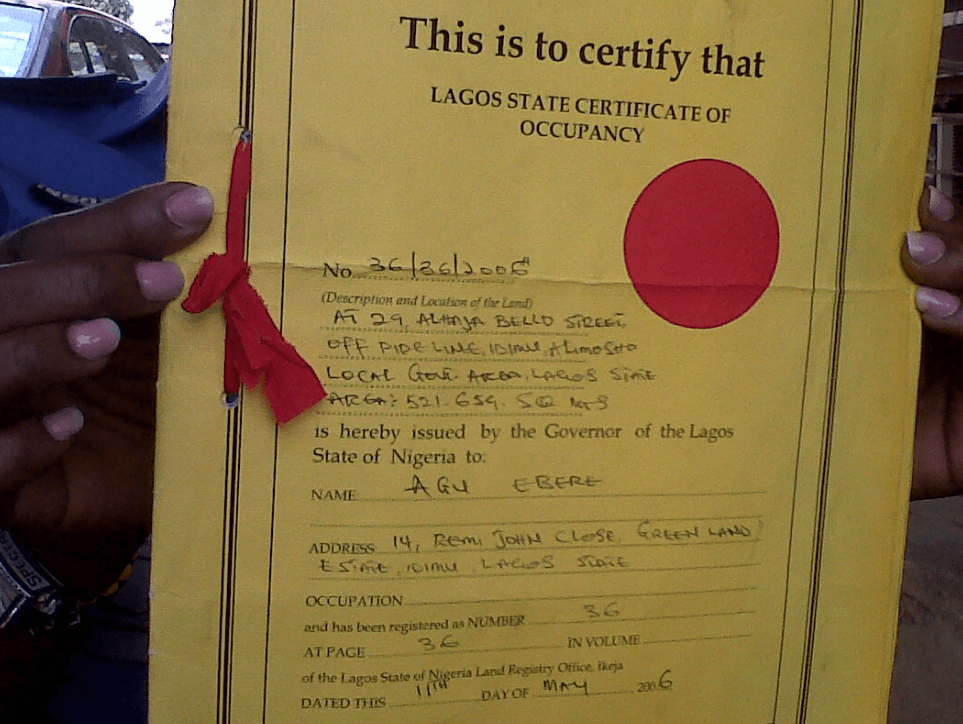
The exact documentation depends on the acquisition method. However, the following documents are among the most important:
- Deed of Assignment
Transfers ownership from seller to buyer.
- Certificate of Occupancy (C of O)
Government-issued evidence of land rights.
- Survey Plan
Defines boundaries and location.
- Deed of Gift
Used when land is transferred without payment.
- Deed of Lease
Used for leasehold arrangements.
- Letter of Allocation
Issued for government allocations.
- Purchase Receipt
Evidence of payment.
- Grant of Probate
Required where inheritance follows a valid will.
- Letters of Administration
Used when a deceased person dies intestate.
- Deed of Assent
Transfers inherited property to beneficiaries.
- Certificate of Sale
Used in judicial sales.
Common Mistakes to Avoid When Acquiring Land in Nigeria
Many land disputes arise because buyers overlook critical due diligence requirements.
Avoid the following mistakes:
- Buying Without Verification
Never rely solely on the seller’s statements.
- Ignoring Survey Verification
Boundary disputes can become expensive and difficult to resolve.
- Skipping Registry Searches
A registry search may reveal existing claims or government interests.
- Buying Family Land Without Consent
Principal family members must approve family land transactions.
- Rushing Documentation
Verbal agreements are insufficient for valuable real estate transactions.
- Failing to Perfect Title
Ownership documentation should be registered appropriately.
Which Method of Land Acquisition Is Best in 2026?
The best option depends on your objective.
For Most Buyers
Outright purchase remains the most practical method.
For Investors
Government allocations often provide strong title security.
For Families
Inheritance and gift transfers remain effective wealth-transfer mechanisms.
For Businesses
Leasehold arrangements can reduce upfront capital requirements.
For Opportunity Buyers
Mortgage sales and judicial sales may offer attractive pricing opportunities.
The key consideration is not merely the acquisition method but the quality of title and supporting documentation.
FAQs About Ways of Acquiring Land in Nigeria
What are the 12 ways of acquiring land in Nigeria?
The 12 recognized methods are outright purchase, inheritance, gift, government allocation, compulsory acquisition, leasehold, customary tenancy, mortgage acquisition, judicial sale, assent, first settlement, and conquest.
What is the most common way of acquiring land in Nigeria?
Outright purchase is the most common method because it allows buyers to acquire ownership directly from existing landowners.
Can land be acquired through inheritance?
Yes. Land can pass to beneficiaries through a will, probate process, or intestate succession rules.
Is a gift of land legally valid in Nigeria?
Yes. A gift of land is legally valid when properly documented and accompanied by transfer of possession.
What is government allocation of land?
Government allocation involves the grant of land rights by state authorities, usually evidenced by a Letter of Allocation or Certificate of Occupancy.
Can I acquire land through leasehold?
Yes. Leasehold grants the right to use land for a specified period without obtaining absolute ownership.
What is customary tenancy?
Customary tenancy is a traditional arrangement where a family or community grants occupation rights while retaining superior ownership.
Is conquest still a valid way of acquiring land?
No. Conquest is only relevant as a historical root of title. It is not a lawful modern method of acquiring land.
What documents should I request before buying land?
At minimum, request the survey plan, title documents, deed of assignment, purchase receipt, and evidence of ownership.
How do I verify land ownership in Nigeria?
Conduct a search at the appropriate land registry, verify survey records, inspect the property physically, and engage a qualified property lawyer.
Can family land be sold by one family member?
Generally, no. Family land transactions typically require the consent of the family head and principal members.
What is the safest way to acquire land in Nigeria?
The safest approach is to conduct comprehensive due diligence, verify title, review documentation, and complete proper registration procedures after acquisition.
Conclusion of Ways of Acquiring Land in Nigeria
Understanding the ways of acquiring land in Nigeria is essential for anyone buying, inheriting, investing in, or developing real estate in 2026.
While outright purchase remains the most popular option, Nigerian law recognizes several other acquisition methods, including inheritance, gift, government allocation, leasehold, customary tenancy, mortgage sales, judicial sales, and assent.
Historical methods such as first settlement and conquest continue to influence land ownership disputes because they often form the root of customary title, even though they are no longer practical means of acquiring new land today.
Regardless of the method used, successful land acquisition depends on one critical principle: verify ownership, review documentation, conduct proper searches, and perfect title after acquisition.
Buyers who follow these steps significantly reduce the risk of fraud, litigation, and loss of investment.
In a market where land values continue to rise across major Nigerian cities and emerging growth corridors, understanding the legal routes to ownership can help you make informed decisions, protect your investment, and secure land with confidence.
Grow Your Real Estate Business Online
RealtyBox helps developers, agencies, and property brands attract qualified buyers through AI, SEO, Google Ads, content marketing, and strategic digital marketing.
Book a Free Strategy Call