How to verify land title in Nigeria is simple in principle: obtain the seller’s title documents, conduct an official search at the State Land Registry, verify the survey plan with the Surveyor-General’s office, inspect the land physically, and engage a qualified real estate lawyer to confirm ownership and identify any legal issues before payment.
If you only remember one thing from this guide, remember this:
Never buy land in Nigeria based on documents shown by the seller alone. Verify every document independently through the appropriate government agencies.
Many land disputes, fraudulent sales, government acquisition issues, and ownership conflicts could have been avoided if buyers had conducted proper title verification before making payment.
The Nigerian real estate market continues to attract investors, home builders, diaspora buyers, and first-time landowners.
As land values rise across major cities like Lagos, Abuja, Ibadan, Port Harcourt, Ilorin, and Enugu, so does the sophistication of land scams.
That is why understanding how to verify land title in Nigeria is no longer optional. It is a mandatory part of every property transaction.
This guide explains the complete verification process, the documents that matter, common mistakes buyers make, red flags to avoid, and the exact steps professionals use to validate land ownership in Nigeria.
GO TO:
Table of Contents
How to Verify Land Title in Nigeria Before Buying Any Property
The fastest way to verify a land title in Nigeria is to conduct three separate checks:
- Verify the title document at the State Land Registry.
- Verify the survey plan at the Surveyor-General’s office.
- Verify physical ownership and possession on-site.
These three checks reveal most ownership disputes, forged documents, government acquisition issues, multiple sales, and encumbrances.
However, understanding the process in detail can save you from making an expensive mistake.
Let’s break down every step.
Why Land Title Verification Is Important in Nigeria
Before discussing the verification process, it is important to understand why title verification matters.
A land title establishes legal ownership and confirms that the seller has the right to transfer the property.
Without proper verification, buyers risk purchasing:
- Government-acquired land
- Encumbered land
- Disputed family land
- Land under litigation
- Land already sold to another buyer
- Land with forged documentation
- Non-existent plots
The consequences can be severe.
Many buyers discover years later that their land cannot be developed, transferred, financed, or legally claimed because they failed to verify ownership properly.
In some cases, entire estates have been demolished because the underlying land title was defective.
Verification protects your money and your future rights over the property.
SEE ALSO: Cost of Building a House in Nigeria 2026: From ₦2M to ₦50M Easily Explained
Understanding Land Titles in Nigeria
Before learning how to verify land title in Nigeria, you must understand the documents you are likely to encounter.
Different titles offer different levels of legal protection.
1. Certificate of Occupancy (C of O)
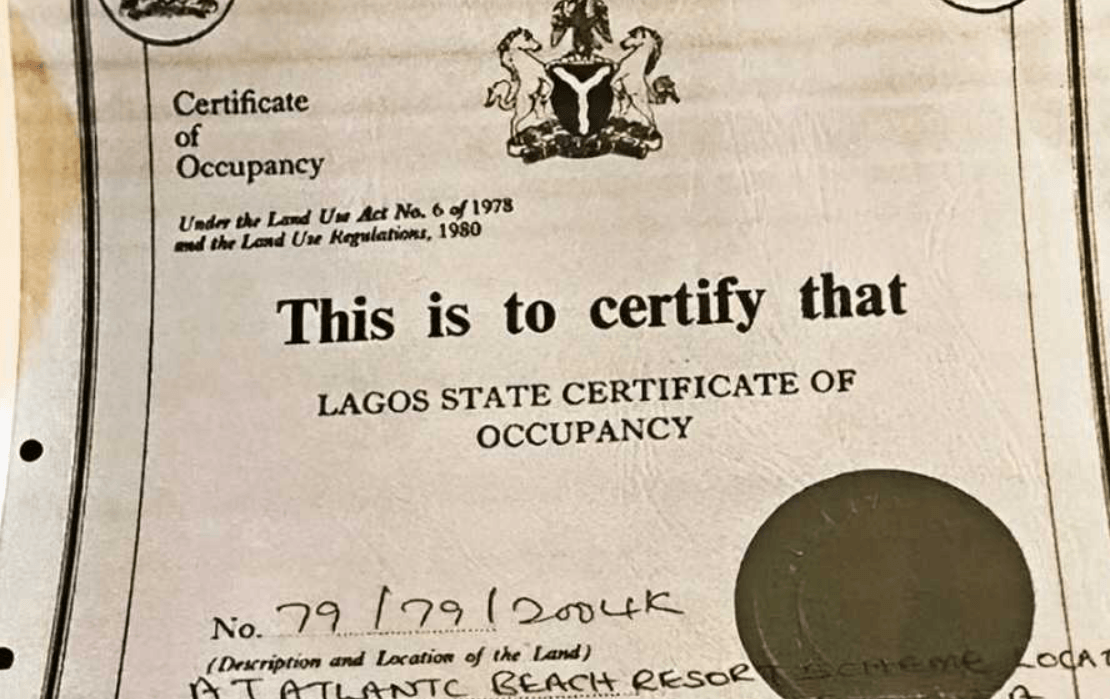
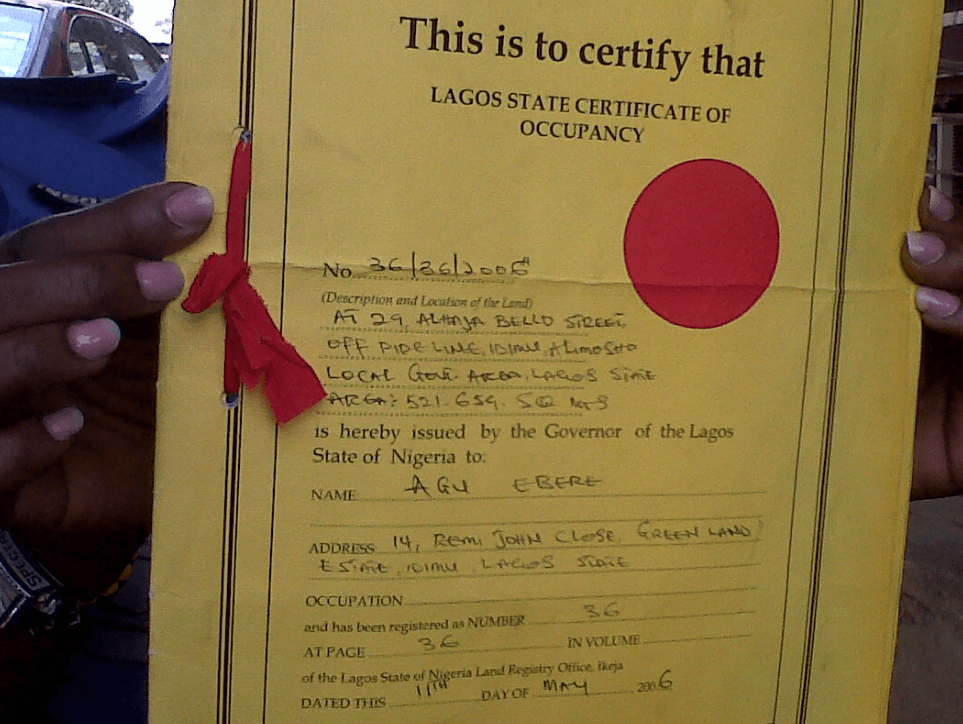
The Certificate of Occupancy, commonly called C of O, is one of the most recognized land titles in Nigeria.

Grow Your Real Estate Business Online
RealtyBox helps developers, agencies, and property brands attract qualified buyers through AI, SEO, Google Ads, content marketing, and strategic digital marketing.
Book a Free Strategy CallIt is issued by the government and grants the holder legal rights to occupy and use land for a specified period, usually 99 years.
A genuine C of O is generally considered a strong title document.
However, buyers should never assume a C of O is authentic simply because a copy exists.
Verification remains necessary.
2. Governor’s Consent
Once a landowner with a C of O transfers ownership to another party, the transaction must receive Governor’s Consent.
This document legally validates the transfer of ownership rights.
A land transaction without the required consent may encounter legal complications later.
3. Registered Deed of Assignment
The Deed of Assignment is the legal document used to transfer ownership from seller to buyer.
For maximum protection, it should be properly registered at the Lands Registry.
An unregistered Deed of Assignment carries greater risk than a registered one.
4. Gazette and Excision
Gazettes and excisions are common in peri-urban and developing areas.
They indicate that the government has officially released certain portions of land to indigenous communities.
Many estate developments and family-owned lands rely on gazette-backed titles.
Verification is especially important because misunderstandings regarding excision boundaries are common.
5. Deed of Sublease
A Deed of Sublease grants temporary rights over land for a specified period.
It is often used within estates, commercial developments, and institutional properties.
6. Allocation Letter
Government agencies, housing schemes, and development authorities often issue allocation letters.
An allocation letter alone may not represent complete title perfection.
Additional verification is required to determine the property’s legal status.
READ ALSO: How to Buy Property in Nigeria in 2026 (Complete Step-by-Step Guide)
How to Verify Land Title in Nigeria Step by Step in 2026
Now, let’s get to the main business on how to verify land titles in Nigeria step by step without stress….
Step 1: Request All Available Land Documents
The first step in how to verify land title in Nigeria is obtaining copies of every available document from the seller.
Do not rely on verbal explanations.
Request copies of:
- Certificate of Occupancy
- Governor’s Consent
- Deed of Assignment
- Survey Plan
- Gazette
- Excision documents
- Allocation Letter
- Registered conveyance documents
- Tax receipts where applicable
A legitimate seller should willingly provide these documents for inspection.
If a seller refuses to provide copies before payment, consider it a major warning sign.
Serious property transactions require transparency.
Step 2: Conduct an Official Land Registry Search
This is the most important verification stage.
The State Land Registry maintains records of registered land ownership and title transactions.
An official search confirms:
- Whether the title is genuine
- Whether the land is properly registered
- Whether ownership records match the seller
- Whether encumbrances exist
- Whether government interests affect the property
- Whether court disputes are recorded
Many buyers incorrectly believe seeing a document means ownership is valid.
A registry search reveals whether government records support the seller’s claims.
What a Registry Search Can Reveal
An official search may uncover:
1. Ownership Mismatch
The name on the title may differ from the person attempting to sell the property.
2. Multiple Sales
The same land may have been sold repeatedly.
3. Existing Mortgages
The property may already be pledged as collateral.
4. Court Cases
Pending litigation can significantly affect ownership rights.
5. Fraudulent Documents
Forged documents often fail verification at the registry.
Step 3: Verify the Survey Plan
A survey plan is more than a drawing.
It identifies the precise location and boundaries of the land.
One of the most overlooked aspects of how to verify land title in Nigeria is confirming that the land physically exists where the documents claim it exists.
A licensed surveyor should verify:
- Beacon coordinates
- Plot dimensions
- Boundary alignment
- Geographic positioning
- Government acquisition status
Why Survey Verification Matters
Many buyers discover after purchase that:
- Their land falls within government-acquired areas.
- Their land overlaps with another property.
- The coordinates belong to a different location.
- The survey plan was altered.
A professional survey verification eliminates these risks.
Step 4: Confirm the Land Is Not Under Government Acquisition
Government acquisition remains one of the biggest threats to unsuspecting buyers.
Land may appear legitimate while actually falling within:
- Road expansion corridors
- Public infrastructure zones
- Utility reserves
- Green areas
- Institutional development zones
- Federal or state acquisitions
A licensed surveyor can determine whether the coordinates fall within government-acquired land.
This verification should never be skipped.
SEE ALSO: 10 Must-Have Top Documents Required for Land Purchase in Nigeria 2026
Step 5: Conduct a Physical Inspection
Documentation is important.
Reality is equally important.
Physical inspection helps confirm:
- Actual possession
- Boundary integrity
- Accessibility
- Existing occupants
- Community issues
- Development restrictions
Many fraud cases involve sellers presenting documents for land that differs from the land shown physically.
Inspection helps bridge that gap.
What to Check During Inspection
Look for:
- Boundary markers
- Existing structures
- Access roads
- Nearby developments
- Drainage conditions
- Utility access
- Signs of dispute
Speak with nearby residents if possible.
Local information often reveals issues not visible in documents.
Step 6: Investigate Ownership History
One of the smartest ways to verify a title is to trace ownership history.
Ask questions such as:
- Who originally owned the land?
- How was ownership transferred?
- How many times has it changed hands?
- Are all transfers documented?
- Were required consents obtained?
Ownership history helps identify irregularities.
A clean chain of ownership generally indicates lower risk.
Missing links should trigger further investigation.
Step 7: Hire a Real Estate Lawyer
If there is one professional you should never exclude from a land transaction, it is a real estate lawyer.
Land law in Nigeria is complex.
An experienced lawyer can:
- Verify documents
- Conduct registry searches
- Review contracts
- Confirm ownership rights
- Investigate litigation risks
- Register transfers properly
- Protect your legal interests
Many costly mistakes occur because buyers attempt to save money by avoiding professional legal assistance.
The legal fee is usually insignificant compared to the potential loss from a fraudulent transaction.
SEE ALSO: Top 5 Fastest Growing Areas in Lagos (2026)
Common Land Titles You Should Verify in Nigeria
Certain title documents appear frequently in Nigerian property transactions.
Each requires a different verification approach.
Verifying a Certificate of Occupancy
Check:
- Registration details
- Issuing authority
- Survey references
- Ownership records
- Authenticity at the Lands Registry
Verifying a Governor’s Consent
Confirm:
- Consent registration
- Transfer validity
- Ownership continuity
- Registration references
Verifying a Gazette
Check:
- Gazette publication details
- Community boundaries
- Excision status
- Government recognition
Verifying a Deed of Assignment
Verify:
- Signatures
- Registration status
- Parties involved
- Property description
- Transfer legality
Red Flags That Suggest a Problematic Land Title
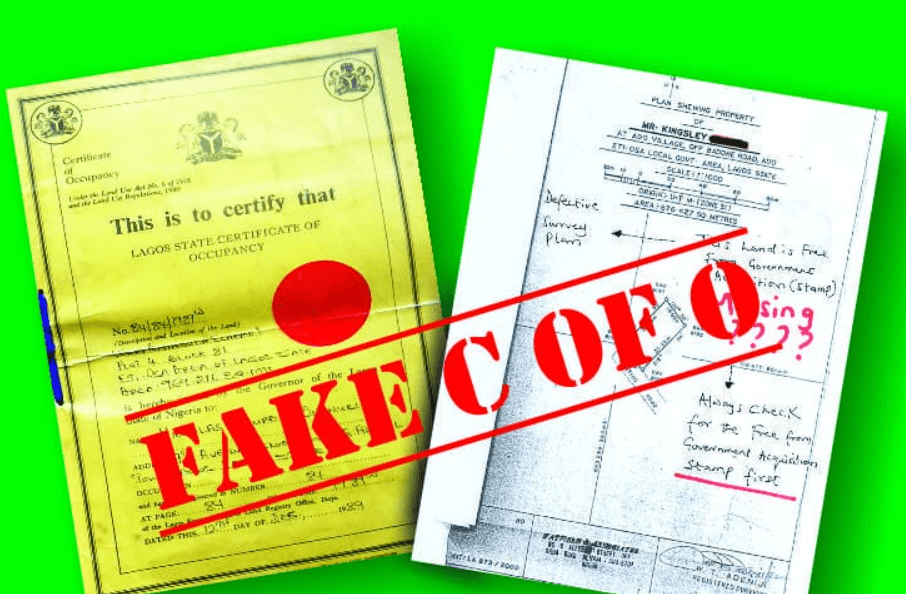
Understanding how to verify land title in Nigeria also means recognizing warning signs early.
Be cautious if:
- The Price Is Unusually Low
A price significantly below market value often indicates hidden problems.
2. The Seller Is Rushing You
Fraudsters often create artificial urgency.
3. Documents Cannot Be Verified
Any resistance to verification should raise concern.
4. Ownership Information Changes
Inconsistent stories indicate possible fraud.
5. Survey Coordinates Do Not Match
Location discrepancies are major red flags.
6. Multiple Agents Are Selling the Same Land
This often signals ownership disputes.
7. The Seller Refuses Legal Review
Legitimate sellers rarely object to professional verification.
How Diaspora Buyers Can Verify Land Titles in Nigeria
Diaspora buyers face unique risks because they are not physically present.
To reduce exposure:
- Hire a reputable real estate lawyer or real estate agent.
- Conduct independent registry searches.
- Use licensed surveyors.
- Avoid making decisions solely through relatives.
- Request video inspections.
- Verify every document independently.
Distance should never replace due diligence.
Land Verification for Estate Properties
Many buyers assume estate land is automatically safe.
This assumption can be dangerous.
Before buying estate property:
- Verify the parent title.
- Confirm government approvals.
- Verify survey documentation.
- Confirm allocation records.
- Review developer documentation.
An estate’s reputation should not replace independent verification.
Cost of Verifying Land Title in Nigeria
Verification costs vary depending on location and complexity.
Typical expenses may include:
- Registry search fees
- Survey verification fees
- Legal fees
- Documentation fees
- Due diligence expenses
While some buyers view these costs as unnecessary, they are often insignificant compared to the financial damage caused by purchasing defective land.
Verification should be viewed as an investment in security.
SEE ALSO: How to Easily Use WhatsApp to Close Real Estate Deals Faster in Nigeria 2026
Mistakes Buyers Make When Verifying Land Titles
Many property investors repeat the same errors.
1. Trusting Family Recommendations Alone
Even trusted referrals require verification.
2. Skipping Registry Searches
This is one of the most expensive mistakes in Nigerian real estate.
3. Relying on Photocopies
Original records must be independently verified.
4. Ignoring Survey Verification
Location verification is just as important as title verification.
5. Avoiding Lawyers to Save Costs
The money saved often becomes money lost later.
6. Paying Before Verification
Payment should come after satisfactory due diligence.
Future of Land Title Verification in Nigeria
Nigeria’s land administration systems continue to modernize.
Many states are introducing:
- Digital land records
- Online title verification systems
- Geographic information systems
- Faster registration processes
- Improved document tracking
While these improvements enhance transparency, traditional verification procedures remain essential.
Technology can assist verification, but it does not replace professional due diligence.
FAQs About How to Verify Land Title in Nigeria
How can I verify land title in Nigeria?
Request title documents from the seller, conduct a search at the State Land Registry, verify the survey plan through the Surveyor-General’s office, inspect the land physically, and engage a real estate lawyer to review the transaction.
What is the safest land title in Nigeria?
A properly registered Certificate of Occupancy combined with a verified chain of ownership is generally considered one of the safest land titles.
Can a Certificate of Occupancy be fake?
Yes. Fraudulent documents exist. A C of O should always be verified through the relevant State Land Registry.
How long does land verification take in Nigeria?
The timeline varies by state, but verification can take a few days to several weeks depending on registry processes and document availability.
Can I verify land title without a lawyer?
It is possible, but not advisable. A lawyer understands legal risks, documentation requirements, and ownership issues that buyers may overlook.
Is a survey plan enough to prove ownership?
No. A survey plan identifies location and boundaries but does not establish legal ownership.
Can land with a Gazette be sold legally?
Yes, provided the Gazette is genuine, the land falls within the excised area, and ownership documentation is properly verified.
What happens if I buy land without verification?
You risk purchasing disputed land, government-acquired land, fraudulently sold property, or land with defective title.
Should I verify estate land too?
Yes. Estate developments should undergo the same level of verification as privately owned land.
Is physical inspection necessary if documents are verified?
Absolutely. Physical inspection confirms that the land matches the documentation and helps identify issues not reflected in records.
READ MORE: 12 Best Ways of Acquiring Land in Nigeria 2026
Conclusion on How to Verify Land Title in Nigeria
How to verify land title in Nigeria comes down to one principle: trust government records and professional verification, not assumptions.
Before buying any land, obtain the seller’s documents, conduct an official Land Registry search, verify the survey plan through the appropriate authorities, inspect the property physically, investigate ownership history, and involve an experienced real estate lawyer.
Every successful property investor understands that verification is not a delay in the buying process.
It is the buying process.
In Nigeria’s increasingly competitive real estate market, the safest buyers are not the fastest buyers. They are the buyers who verify everything before committing funds.
If you follow the steps outlined in this guide, you will dramatically reduce your risk, protect your investment, and purchase land with confidence in 2026 and beyond.
For more tips and updates like this, log on to RealtyBox Media Online…
Grow Your Real Estate Business Online
RealtyBox helps developers, agencies, and property brands attract qualified buyers through AI, SEO, Google Ads, content marketing, and strategic digital marketing.
Book a Free Strategy Call